The information provided on this website is intended for Healthcare Professionals in the UK only. If you are a parent or caregiver of a child who has been prescribed Methylphenidate Hydrochloride 2mg/ml oral solution (sugar free) for ADHD, please click here. If you are interested in finding out more about ADHD, please click here. Adverse event reporting information can be found at the bottom of the page.
PRESCRIBING INFORMATION
Methylphenidate Hydrochloride 2mg/mL oral Solution
(Methylphenidate hydrochloride).
Please refer to Summary of Product Characteristics (SmPC) before prescribing.
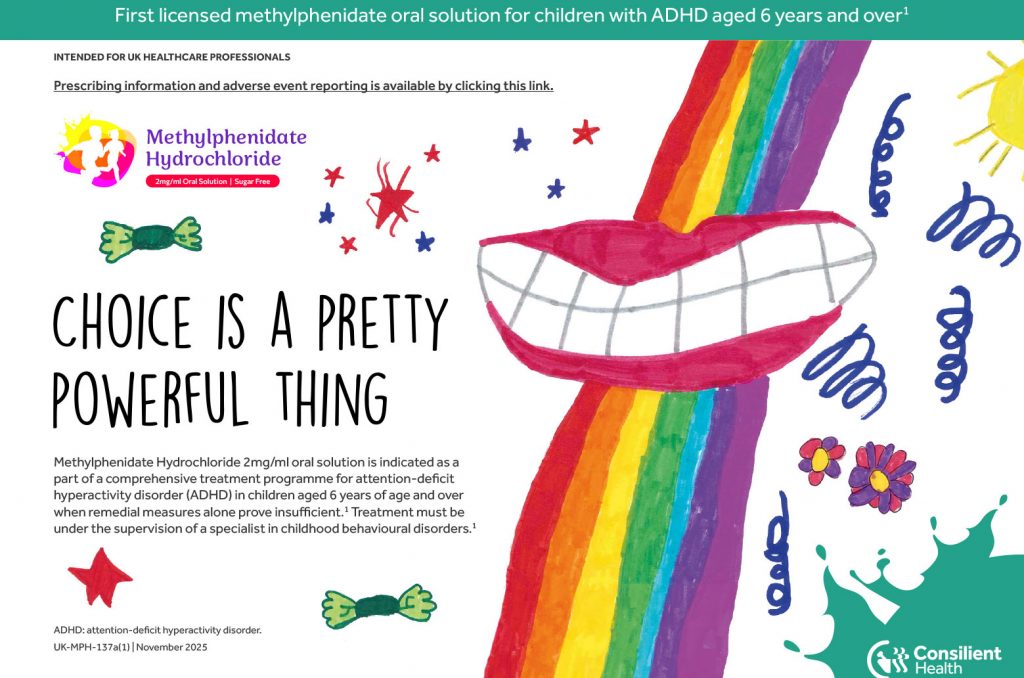
Indication Methylphenidate Hydrochloride 2mg/mL Oral Solution is indicated as part of a comprehensive treatment programme for attention deficit hyperactivity disorder (ADHD) in children aged 6 years of age and over and adolescents when remedial measures alone prove insufficient. Treatment must be initiated under the supervision of a specialist in childhood and/or adolescent behavioural disorders. Dosage and administration Solution for oral use. Careful dose titration is necessary at the start of treatment with methylphenidate – 5mg once or twice daily increasing the dose and frequency of administration if required by weekly increments of 5-10mg in the daily dose. Doses above 60mg daily are not recommended. Contraindications Hypersensitivity to the active substance or to any of the inactive ingredients. Glaucoma; phaeochromocytoma; during or within 14 days of discontinuing treatment with monoamine oxidase inhibitors; hyperthyroidism or thyrotoxicosis; diagnosis or history of severe depression; anorexia nervosa/anorexic disorders; suicidal tendencies; psychotic symptoms; severe mood disorders; mania, schizophrenia, psychopathic/borderline personality disorder. Diagnosis or history of severe and episodic (Type 1 ) Bipolar disorder; Pre-existing cardiovascular or cerebrovascular disorders. Please refer to SmPC. Warning and precautions Patients on long term therapy (more than 12 months) require ongoing monitoring for cardiovascular status, growth (height and weight), appetite, development of new/worsening of psychiatric disorders. Please refer to SmPC. De-challenge treatment at least once a year. Increased intraocular pressure and glaucoma: Cases of raised intraocular pressure (IOP) and glaucoma have been reported during methylphenidate treatment. Consider ophthalmologic monitoring, particularly in patients with a history of raised IOP or glaucoma. Consider discontinuation if IOP increases. Caution is indicated in treating patients whose underlying medical conditions might be compromised by increases in blood pressure or heart rate. Monitor neurological signs and symptoms at every visit. Development or worsening of psychiatric disorders should be monitored at every
adjustment of dose, then at least every 6 months, and at every visit: discontinuation of treatment may be appropriate. Potential for abuse, misuse or diversion in patients with known drug or alcohol dependency. Caution is advised in patients being treated with methylphenidate with any other active substances that can also elevate blood pressure. Alcohol may exacerbate the adverse CNS effect of psychoactive medicinal products, including methylphenidate. Caution is recommended when administering methylphenidate with dopaminergic substances. Pregnancy and lactation Not recommended. Effects on ability to drive and use machines Potentially hazardous activities such as driving or operating machinery should be avoided. Undesirable effects (Very common): insomnia, nervousness and headache. (Common): Nasopharyngitis, anorexia, decreased appetite, moderately reduced weight and height gain during prolonged use in children, affect lability, aggression, agitation, anxiety, depression, irritability, abnormal behaviour, tension, bruxism, dizziness, dyskinesia, psychomotor hyperactivity, somnolence, tension headache, vertigo. Arrhythmia, tachycardia, palpitations, hypertension, cough, pharyngolaryngeal pain, abdominal pain, diarrhoea, nausea, abdominal discomfort, vomiting, dry mouth, dyspepsia, alopecia, pruritis, rash, urticaria, arthralgia, muscle tightness, muscle spasms, pyrexia, growth retardation during prolonged use in children. Fatigue, Irritability, feeling jittery, asthenia, thirst, changes in blood pressure and heart rate (usually an increase), weight decreased. (Frequency not known): Pancytopenia, Cerebrovascular disorders (including vasculitis, cerebral haemorrhages, cerebrovascular accidents, cerebral arteritis, cerebral occlusion), grand mal convulsion, migraine, dysphemia, supra-ventricular tachycardia, bradycardia, ventricular extra-systoles, trismus, epistaxis, incontinence, erectile dysfunction, priapism, erection increased and prolonged erection, chest discomfort, hyperpyrexia, increased intraocular pressure, glaucoma. For uncommon, rare and very rare side effects please see SmPC for further information. NHS Price £85 per 150ml bottle Legal Category POM. MA Number PL 24837/0166 Market Authorisation Holder Consilient Health Ltd. Floor 3, Block 3, Miesian Plaza, Dublin 2, D02Y754, Ireland. Job Code UK-MPH-182. Date of preparation of PI
October 2025.
Adverse events should be reported. Reporting forms and information can be found at https://yellowcard.mhra.gov.uk. Adverse events should also be reported to Consilient Health (UK) Ltd, No. 1 Church Road, Richmond upon Thames, Surrey TW9 2QE UK or drugsafety@consilienthealth.com
UK-MPH-45h(1) | October 2025

A short animation giving step-by-step instructions on administering methylphenidate oral solution.
This two minute animation gives simple step-by-step instructions on how to administer your child’s doses of methylphenidate oral solution exactly as prescribed by their doctor. Following these simple steps helps to ensure that your child gets the very most from therapy.
A quick reference guide to ADHD and its treatment with methylphenidate oral solution.
This quick reference guide gives you easily accessible information about ADHD and its treatment with methylphenidate oral solution. This includes simple step-by-step instructions on administering this medicine, as well as answers to frequently asked questions, such as possible side effects to look out for and how to store methylphenidate oral solution.
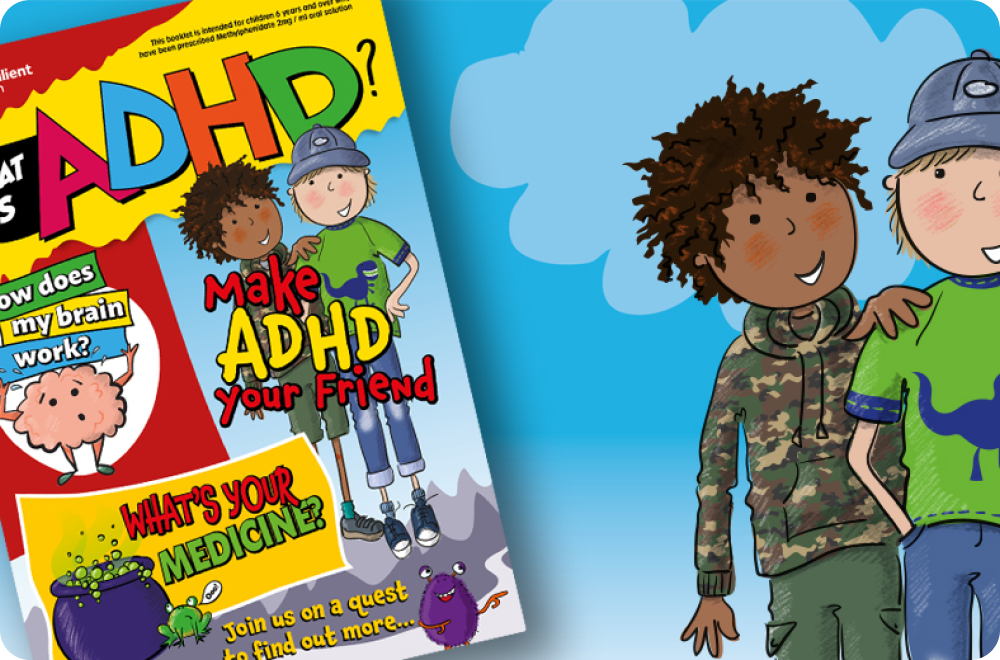
A fun, interactive way to help children with ADHD find out more about their condition and its treatment.
This comic-style booklet helps children with ADHD to explore their condition and its treatment in a fun, interactive way. The booklet explains how treatment helps kids to make friends with their ADHD, so that they can do lots of things together. There’s easy to understand information about methylphenidate oral solution too, helping your child to understand their treatment and get the very most from it.
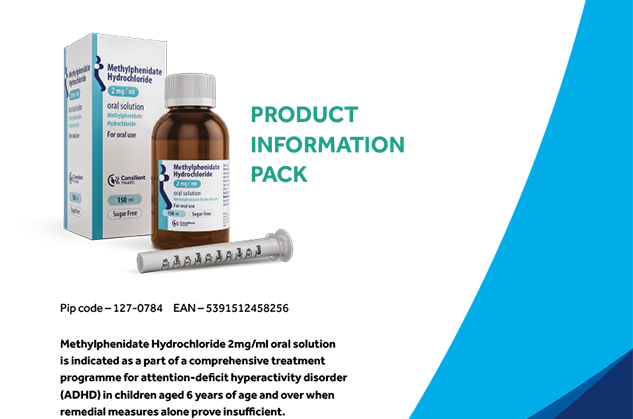
This information pack has been developed to provide a central resource that may be used for activities such as completion of a formulary request for Methylphenidate Hydrochloride 2mg/ml oral solution (sugar free). It contains a wealth of information about this medicine and its place in therapy, from guidelines and recommendations to bioequivalence data and financial considerations vs. immediate-release methylphenidate tablets.
This two minute animation for parents and caregivers of children with ADHD gives simple step-by-step instructions on how to administer doses of Methylphenidate Hydrochloride 2mg/ml oral solution (sugar free) exactly as prescribed. This includes important information to help ensure that treatment is delivered as safely and effectively as possible.
This quick reference guide for parents and caregivers of children with ADHD combines background information on the condition with practical guidance on helping their child to get the very most from treatment with Methylphenidate Hydrochloride 2mg/ml oral solution (sugar free). This includes step-by-step administration instructions and answers to frequently asked questions.
This quick reference guide provides key information on Methylphenidate Hydrochloride 2mg/ml oral solution (sugar free), including prescribing considerations, dosage and administration. The guide also includes useful information to share with parents and caregivers of children receiving this medicine, to help ensure that treatment is delivered as safely and effectively as possible.
This highly visual resource takes a fun, interactive approach to helping children with ADHD explore their condition and how it affects them. It presents ADHD as being like a really great friend who can help them to do things when they take the medicine that you have prescribed. Specific child-friendly information about Methylphenidate Hydrochloride 2mg/ml oral solution (sugar free) is included to help patients get the very most from treatment.